Psychotherapist, Author, Speaker

Blog

Robin D. Stone is a New York City based psychotherapist, coach and consultant who works to help you achieve your most optimal self. 

We’ve Experienced Racial Pain, Here Are Ways to Heal From It
Credit: MimagePhotography for Canva

Credit: MimagePhotography for Canva


Racism can feel like a daily occurrence in America, and there are so many ways we can experience it. There’s the random white woman touching your hair without your permission. The passive-aggressive colleagues who never really liked you and you think you know why. Or even the security guard that watches you way too closely while you’re out shopping. All of these experiences, and more, can add up to racial trauma, something that affects many of us every day. Especially after 2020.

It’s all exhausting and it can take a toll on our mental health. And it can be hard to prove or even diagnose, especially when speaking to a white doctor or therapist. However, recognizing the impact of these experiences in your life can be immensely helpful. That validation can help contribute to your recovery.

In my latest article for the Sisters AARP newsletter, “We’ve Experienced Racial Pain, Here Are Ways to Heal From It”, I share tips on how to identify the effects of racially traumatic experiences and start the healing process. Click to read the full article here.

 
Moving Through What Seems Like the Longest Winter Ever
Source: Rido/Canva

Source: Rido/Canva


As the coronavirus continues its relentless march through humanity, there are rays of hope with the recent approval and distribution of the first vaccines. But it may still feel as if we are moving into a season of uncertainty, with cold settling in throughout many parts of the country and folks hunkering down for the season. This winter is sure to look—and feel—very different from winters past.

Seasonal sadness and feelings of loneliness are common for some with shorter days. These feelings are magnified with the country in the grip of a coronavirus resurgence, with hospitals in some regions overwhelmed with the sick and dying, millions still unemployed, miserly government support, and anxiety about when safe vaccines will be widely available. 

That brings us to “pandemic fatigue,” a sense of weariness from the steady case and death count and constant hyper-awareness—from washing your hands to wearing a mask to not being able to gather with others as freely as you normally would. Most of us have been dealing with this since early March of 2020, and the uncertainty of not knowing when it will end contributes to the sense of fatigue. Add to this fears of shutdowns—cutting us off from family, friends, and the places we love at a time when most people are drawn together by ritual and tradition—and it might seem as if we’re headed into the longest winter ever. 

Source: EvaBlancoPhotos/Canva

Source: EvaBlancoPhotos/Canva

For communities of color in the United States, the impact is felt even deeper, as Black and Latino people, who are nearly twice as likely to die from the coronavirus as white people, have been disproportionately affected in urban, suburban and rural areas, and across all age groups throughout the country, according to The New York Times. These communities are also heavily affected by job loss, racial injustice, social inequities, and lack of (or loss of) insurance, and many have to manage the stress of working in frontline jobs where social distancing is difficult if not impossible. 

While many of these circumstances are simply not within your control, you do not have to let the worry of winter wash over you. You can aim to be your healthiest self by finding ways to stay connected, stay active, and stay positive while staying safe. Here are seven ways to help you to move through the season:

Source: Oleg Baliuk/Canva

Source: Oleg Baliuk/Canva

1. Add walking to your day. A brisk walk, even just 10 minutes, gets your heart rate up and your blood flowing. Exercise that elevates your heart rate contributes to a D.O.S.E. of feel-good hormonesBrisk walking is also credited with helping you maintain a healthy weight, strengthen bones and muscles, help prevent heart disease and type 2 diabetes, and improve your mood. 

2. Stay connected. Even though you and your family or friends may not travel to see each other this year, you can still get together virtually via Zoom or FaceTime for game night, milestones, or other occasions that give you a reason to celebrate. Have the video rolling as you cook or have dinner together. Technology provides us many options to stay connected as we stay safely apart.

3. Expand your spiritual practice. Having a spiritual practice, whatever that looks like for you, will help you stay grounded during these tumultuous times. Whether it’s prayer, meditation, chanting, or some other practice, create space to focus inward and connect to a higher power, energy, or frequency. Need some help getting started? Try this guided meditation app, Liberate, which is a safe space for Black folk to develop a daily meditation habit.

4. Engage your creative side. Art is a cultural touchstone for many of us and often reflects what’s going on in our world—from music to writing and more. Try tuning into concerts online, dancing the night away to DNice, or safely visiting museums as a way to engage with the arts in your life. Want to learn to paint? Try a paint and sip class online. Cultivate a regular writing practice through journaling or use a site like Six-Word Memoirs to get you started.

5. Commit to learning something new. From cooking to jiu-jitsu to yoga, online classes are abundantly available for you to take your pick and are a great way to spend downtime at home. Joining a class gives you a reason to show up each week and creates opportunities for social connections with your fellow learners... 

Learn a new skill, participate in a favorite hobby with others via online groups, or take a fitness class. If yoga is your thing, or you’d like to try it out, here is a list of 20 Black yoga instructors with online classes to get you started.

Source: Braun S/Getty Images Signature

Source: Braun S/Getty Images Signature

6. Be still. Know that winter is a time of rest and renewal. Many plants and animals that go dormant for the season emerge in the spring full of fresh life and energy.

You don’t have to hibernate, but your body may need to take a break. Give yourself the gift of a day or an hour or even 15 minutes with nothing to do. Slow down. Read. Listen to music or soothing sounds or your heartbeat, settle your body, and reset.

7. Be encouraged. Consider that you’re moving through the most difficult days of what may be the most difficult year in your lifetime. Journal about what you're grateful for at this inflection point in your life, what you’d like to leave behind in 2020, and what you need to move forward in 2021.

 
An Election, a Pandemic and the Power of Hope
Design by Sarah Tulloch with Canva

Design by Sarah Tulloch with Canva


Lift ev’ry voice and sing …

As I write this article, Joe Biden and Kamala Harris are preparing to speak for the first time as President-Elect and Vice President-Elect of the United States of America after their historic, hard-fought win of the 2020 presidential election. 

Til earth and heaven ring …

Regardless of whether you are one of the 74 million-plus Americans who voted for the Biden-Harris ticket, it’s hard to ignore the jubilation that fills the streets of many cities around the country as supporters celebrate with strangers and loved ones alike. Many Americans are feeling something that perhaps they were running low on: hope. After four tumultuous, divisive years -- and a 2020 that no one could have imagined -- hope is a welcomed emotion.

Ring with the harmonies of Liberty …

Hope is a feeling of optimism rooted in the expectation that what you want will happen. Hope is about aspiring, believing and leaning on faith. With hope, the positive can prevail. Hope can anchor us when everything else seems uncertain or in decline. It helps us to hang on through anxiety, move through fear, recover from disappointment and reawaken dreams and desires. Hope is what animates our goals and drives us to reach them, which in turn gives us more hope. Yes, hope is regenerative. In working with a client who is experiencing deep sadness or depression, one of the first things that I try to determine is her capacity for hope, because hope is the scaffolding on which to build a way out of despair. 

Let our rejoicing rise … high as the list’ning skies … 

And hope, especially, is what we need in this moment. With systemic racism and disproportionate deaths from COVID-19 deeply afflicting our communities, hope may, at times, feel like all we have. This experience is not new for us. Historically, hope has fueled our resilience. Hope is what led enslaved Africans to dream of and steal away for freedom. Hope is what led the late Congressman John Lewis and hundreds of other brave souls to march across the Edmund Pettus bridge for voting rights. Hope is what fueled the effort of Shirley Chisholm, the barrier-breaking New York Congresswoman, to become the first Black person from one of the two major parties to pursue the presidential nomination. Hope is what led Black folks, and Black women in particular, to ensure that a Black woman became the first woman and first woman of color elected Vice President of the United States of America. 

We immerse ourselves in that which brings us hope. Hope is in our art, our literature and lyrics, on the screen and stage. It’s in the way we masked up, lined up, and broke out in the cha-cha slide while waiting at the polls. Every ballot mailed in was sealed with hope. 

Let it resound loud as the rolling sea …
Here are some reasons to remain hopeful in this historic moment and beyond:

Your voice matters. Witnessing the painstaking task of making sure every vote is counted should let you know that your vote matters and that you have the capacity to affect change.

Sing a song full of the faith that the dark past has taught us …


You can make a difference. Not only can you let your voice be heard in the national election, but you can also get involved in your local community. You can help with voter registration efforts, volunteer to be a poll worker, support a Political Action Committee, or you may even choose to run for office yourself. Even outside of politics, there are plenty of opportunities - in person and virtual. Find one that suits you and get involved with something bigger than yourself -- which in and of itself helps instill a sense of purpose and, yes, hope.

Sing a song full of the hope that the present has brought us …

You’re not powerless. This year especially, there may have been moments when you felt helpless. Perhaps you or someone you love fell ill with COVID-19, or perhaps you were financially affected by the pandemic. Yes, there may be some circumstances outside of your control, but if you try to focus on what you can control, and the ways you can find support, you may find that even in the toughest of times, you are more powerful than you think. 

Facing the rising sun of our new day begun ...

You can do hard things. Whether you waited in line for hours to cast your vote,  whether the candidates you supported down the ballot won or lost, you made it through the most polarizing election in a lifetime, and you are forging your way through what might seem like an impossible 2020. You are a survivor. And may that, too, bring you hope.

Let us march on 'til victory is won 

(“Lift Every Voice and Sing” lyrics by James Weldon Johnson & J. Rosamond Johnson.)

 
When Racism’s Heavy Toll Contributes to Weight Problems
Design by Sarah Tulloch with Canva

Design by Sarah Tulloch with Canva


The chronic racism in the United States is stressing out Black people all over the country. That stress may be causing us to hold our emotions in our bodies and causing us gain to weight. As upsetting as the actual act of racism is outwardly, we must remember to look inward and heal ourselves emotionally, mentally, and physically. Racism contributes to long-term chronic pain and life long diseases. Now that we know this, it's our job to be gentle with ourselves and take the time to nurture the only body we have now so we can continue to be great.

When your body is assaulted with racism, it can express itself mentally as anxiety, depression, irritability, exhaustion, and feeling overwhelmed. Physically, stress caused by racism can manifest itself as heart disease, high blood pressure, type 2 diabetes, and increased fat around your abdominal area. 

In my latest article for the Sisters AARP newsletter, “When Racism’s Heavy Toll Contributes to Weight Problems”, I share tips on how to heal your body in the moment and how to create a long term routine to combat the physical effects of racism. Click to read the full article here


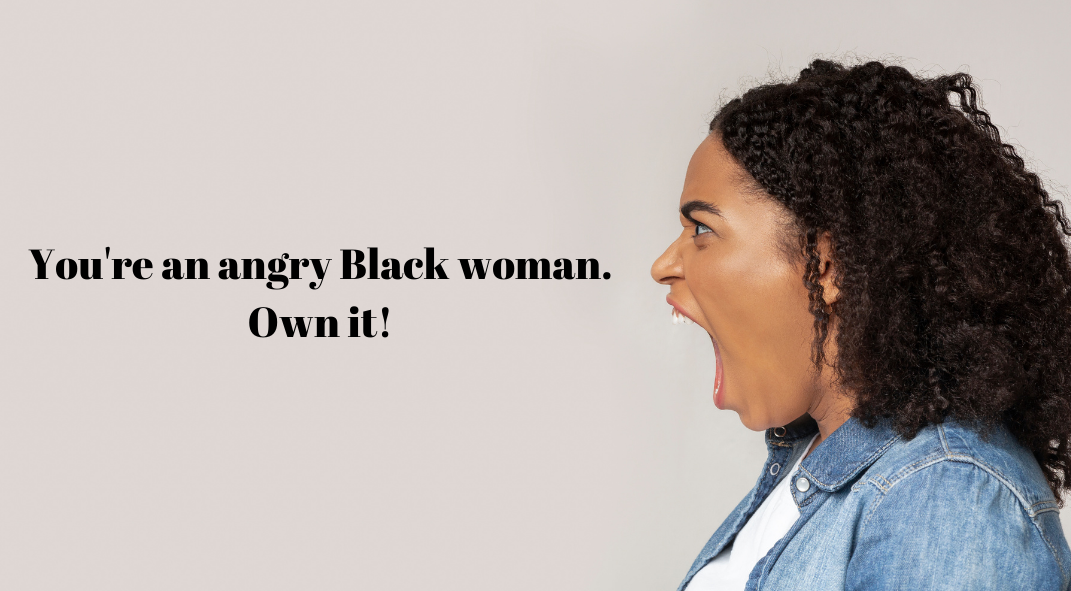
How Black Women Can Put Their Anger To Good Use


The “angry Black woman” trope can be damaging to a Black woman’s psyche and your sense of self if you let it. But there are ways that your anger can inform and empower you. 

As the writer James Baldwin famously said in a 1961 radio interview when asked about being Black in America: “To be a Negro in this country and to be relatively conscious is to be in a state of rage almost all of the time — and in one's work. And part of the rage is this: It isn't only what is happening to you. But it's what's happening all around you and all of the time in the face of the most extraordinary and criminal indifference, indifference of most white people in this country, and their ignorance.”

Baldwin shared this observation nearly 60 years ago, but if you take inventory of the state of the world today -- in your life and in the broader society -- there’s still a lot to be angry about. It’s likely that you deal with persistent microaggressions in your professional and personal life, with  knowing that you are paid 38% less than white men and 21% less than white women even while you’re as qualified, and with experiencing repeated trauma from a newsfeed full of outrageous stories about the policing of Black bodies. Add to that the disproportionate impact of the COVID-19 virus on Black and Brown communities, and how could you not be angry?

Too many Black women feel they can’t acknowledge, much less express, their own anger for fear of being labeled an “angry Black woman.” But getting in touch with your anger could be just what you need to move through difficult experiences in your life.

As I recently wrote in an article for Sisters AARP, “anger is a part of a full range of emotions, and even though it’s a negative emotion (as are fear, anxiety and sadness), that doesn’t make it unhealthy. All emotions are useful because they convey information, and negative emotions help you recognize threats and respond to danger. So the question is, what is your anger telling you, and what can you do in response?”

Read on for the full article, You’re an Angry Black Woman? Own It. And learn how to put your anger to good use.


Healthy boundaries Matter


As Americans of all stripes march and rally and push to end racial injustice, not only are Black folks reinvigorated to to fight chronic, systemic racism — the other pandemic that we we’ve been facing all along — we’re also being asked to talk about it! In addition to exploring with family and friends in spaces where we feel comfortable, some of us are being invited by white colleagues to share our thoughts and experiences at the office.

But maybe you don’t want to talk about it at the office. And you know what? That’s OK!

In my latest article for the Sisters AARP newsletter, “Boundaries Matter: It’s OK to Not Want to Talk To White People about Racism,” I share some ways you can establish healthy boundaries in your workplace so that you can take care and protect yourself from racially traumatic experiences in white spaces. Read the article here.


Facing Grief and Loss


The continuing rise of COVID-19 deaths and the disproportionate impact on Black folks, the killing of Breonna Taylor, the killing of Ahmaud Arbery, the killing of George Floyd—the first six months of 2020 have been a lot for us to handle. And understandably, so has the grief that we all feel. Not only are we grieving loss of life, but also the loss of our way of life in many cases where simple gestures such as a handshake or a trip to the grocery store require more contemplation than they ever had before. The important thing about grief, though, is not to avoid it, but rather to go through it so you can begin to heal.

In a recent article I wrote for Sisters from AARP, I share how you can use a framework called The Four Tasks of Mourning (by psychologist and death education expert J. William Worden), how to move through those tasks, and how to feel better over time. Click here to read the full article.


How to stay Connected While Navigating This New World
Fill Your Love Tank image.png
 

Although parts of the world are opening back up, the coronavirus pandemic is still ever-present, fraying nerves and patience as we all learn to adapt. Between balancing work (or looking for work), wondering if the kids will have camp this summer and way too many Zoom meetings and toilet paper scavenger hunts, it may seem as if the last thing you and your honey have time to think about is each other. If stress and busyness have created distance between you, it may be time to reconnect.

In a recent article I wrote for Sisters from AARP, I share how the stress we’re all under — whether we’re still quarantined or navigating life within this new world — can keep us from checking in with each other and making sure our “love tanks” are full. Click here to learn some simple ways to reconnect, refill and keep your love alive.

 
Podcast: cultivating resilience in the Age of Covid-19
 
sad woman.png

I recently appeared on the Support is Sexy podcast with author, speaker and coach Elayne Fluker, who interviews diverse and inspiring women and shares their entrepreneurial success stories of personal growth, courage and transformation.

We explored the uncertain, unnerving terrain of the world of the coronavirus. As news continues to fill our timelines and TV screens, and as we adapt to lives that are vastly different from the way they were at the start of the year, many of us are trying to figure out our "new normal."

Elayne led with thoughtful questions including how to manage stress and anxiety, how to harness the power of the breath, and how to practice self-care in meaningful ways. Viewers also had a chance to ask their own questions. 

This was one of Elayne's "Wine Down" sessions for Support is Sexy -- where viewers are invited to bring a glass of their favorite beverage and join her for real-deal talks with women experts in various fields.

In the end, we opened a powerful and healing dialogue about tools for Black women to cultivate resilience in the eye of the storm. You can hear the full conversation below':

I thank Elayne - a creative visionary, collaborator, friend and former ESSENCE colleague - for providing a necessary space for women to gather, speak their truths, face their challenges and lift one another up.

You can find Elayne's impressive collection of interviews with more than 500 women entrepreneurs from around the world at supportissexy.com.

 
starting 2020 Off with a Bang; Not Baggage
 
Luggage+-+drop+baggage.jpg

Resolution reset:

Drop the emotional baggage and let go of things that no longer serve you.


We are already ankle-deep into 2020, and at this point, some resolutions may be roadkill and you may need to revise or recommit to your goals. Many of us aspire to start fresh and establish healthy habits at the top of a new year -- our vision boards abound with exciting new adventures and attitude. But in order to succeed, we may need to break bad habits too. Think about it: What are some habits, beliefs, behaviors -- and maybe even people -- that don’t fit your life anymore? 

Here are some suggestions to help you drop emotional baggage and attachments that may have held you back in years past so you can pursue new goals in this new decade.

  1. Give up the people-pleasing. Saying “yes” when you really mean “no” isn’t being nice or polite. It’s you not setting healthy boundaries. And not having healthy boundaries -- even with people you love -- can lead to stress, frustration and resentment because you’re sacrificing your needs to meet someone else’s. Express what you need or what you won’t tolerate. That might mean saying “no” to requests or expectations that you might have allowed in the past. Some folks may have a hard time accepting this new, boundary-having you; but if they want to be a part of your life in this new decade, they will have to adjust.

  2. Let go of the one you won’t let get away. You know the pattern: You’ve been dating him or her off and on for a while, maybe even years. The two of you aren’t the best fit, and you keep saying you’re going to end the relationship for good this time; but you can’t seem to honor that commitment. Maybe there’s a part of you that believes that someone who is a better fit won’t come along. So Mr. Not-Quite-Right keeps recycling through your life, bringing yet another cycle of disappointment. If you’re in a relationship in which you don’t feel seen, heard and respected, it’s time to leave. It is worth the discomfort (and maybe the loneliness) of separating now so you can move on and enjoy a stronger relationship later.

  3. Stop filling holes in your life with things (or people). When it comes to being fulfilled, self-love is the secret sauce. Overeating, overspending and overindulging in chaotic relationships can all be signs of using things and people to comfort yourself. Instead, you may need comfort that comes from rest, self-reflection, meditation and deepening your spiritual practice. Try journaling to explore your feelings, what’s missing, or how you want your life to be different. If you need additional support, seek a counselor or therapist.

  4. Stop procrastinating. Big dreams can be scary, especially when they force you outside of your comfort zone. But procrastination can also bog down seemingly simple tasks on your to-do list (like that routine medical checkup). If you find you’re putting off the simple things, ask yourself “What am I afraid of?” You may realize that you’re afraid to face test results or to finally hear what your intuition has been trying to tell you. Decide to cultivate a new habit: take action. Whether that’s finding a new job, writing that proposal or finally making that doctor’s appointment! If you need some support getting started, try a time-management matrix to help you organize your priorities. You can also ask a trusted friend or seek the support of a coach or therapist to help you get organized and stay on  track.

  5. Check your worries - and treat your anxiety.  Worry is considering and  working through specific problems to find solutions. Fear of bombing a presentation at work is a worry that you could try to address with prep work. Worry is temporary and you experience it in your thoughts. Unchecked worries can contribute to anxiety - an overall sense of unease that may leap from one thing to another or be about nothing in particular. Fear of losing your job, getting sick and then growing old alone is anxiety. Anxiety lingers and you experience it in your body -- from restlessness to fatigue and muscle aches to difficulty concentrating or sleeping. If you find that your worries spiral or jump from one event to another over at least six months, and that relaxation strategies like deep breathing and meditation aren’t working, then you should talk with a professional who can help. The first step to dealing with anxiety is to acknowledge that you don’t have to be stressed out over things you can't control. 

  6. Debunk limiting beliefs. Your mindset determines whether you view roadblocks as opportunities or obstacles. If you believe that roadblocks limit your ability, then you may need to work on shifting your perspective. Just because you choose to believe something doesn’t make it true. Start by challenging your beliefs: Ask yourself, “Where’s the evidence that I can’t make this happen?” Some beliefs may have been passed down in your family or may be the result of your experience and environment. Others may be related to internal issues, such as a lack of self-acceptance (an awareness and ability to accept yourself--flaws and all). Replace limiting beliefs with empowering beliefs. When a roadblock pops up, say to yourself, “I can figure this out. I can ask others for help if I need to. I have what I need - or can find what I need - to get through this.” If you’re feeling stuck, a counselor can help you identify limiting beliefs, address them and leave them behind.

    7. Don’t be afraid to try something new. Whether it’s volunteering with a local community group or signing up for that salsa class you’ve been eyeing, unless it’s a threat to your health and wellness, don’t let fear stop you from pursuing your interests and having fun. Showing up helps you stretch and grow, connecting with others and experimenting with new ways of being in the world. And you may find a new passion along the way. 

    8.  Sever “situationships.” A situationship is that strange, murky space between a-little-more-than-a-friendship and not-quite-in-a-relationship that a lot of women allow themselves to linger in. If this is OK by you, then fine. But I find that many clients are looking for a relationship and settling for a situationship. You pretend you’re cool with casual interactions and casual sex, while you wonder whether your friend/not-quite-boo will “get serious” someday. More than likely, they won’t because you’ve approved of the situation -- and your silence counts as approval. If you want a real relationship, say so. Your situationship may evaporate in the face of your demand, but that will allow you to focus your time, energy and efforts on finding someone who wants a relationship just as you do. Anything else is just a distraction. And distractions are so done this decade!

    9. Quit asking for permission. You don’t need permission to do anything that you want to do in your life! Now, if you’re in a relationship, then you should absolutely explore the financial and emotional impact your plans may have on your partner, so communication is crucial. But having a discussion on pursuing your goals is different from asking permission to do so. More often though, we seek permission or approval from people who have little impact on our lives -- other than the power we give them -- hello, social media! If likes matter to you more than living your life freely, it’s time to make a change. Don’t waste another year waiting for someone to tell you it’s OK to go for your dreams.


    Robin D. Stone is a Licensed Mental Health Counselor at Positive Psychology Associates in Manhattan. She is the author of No Secret, No Lies: How Black Families Can Heal from Sexual Abuse and lead writer of the Essence book, The Black Women’s Guide to Healthy Living. She is developing an expressive arts wellness center in Harlem, New York. Learn more about Robin’s services and connect with her at robinstone.com

 
Robin Stone, LMHC, PLLC